Category Archives: Post
Why Is the Shaker Screen So Important in Oilfield Drilling?
Why Is the Shaker Screen So Important in Oilfield Drilling?
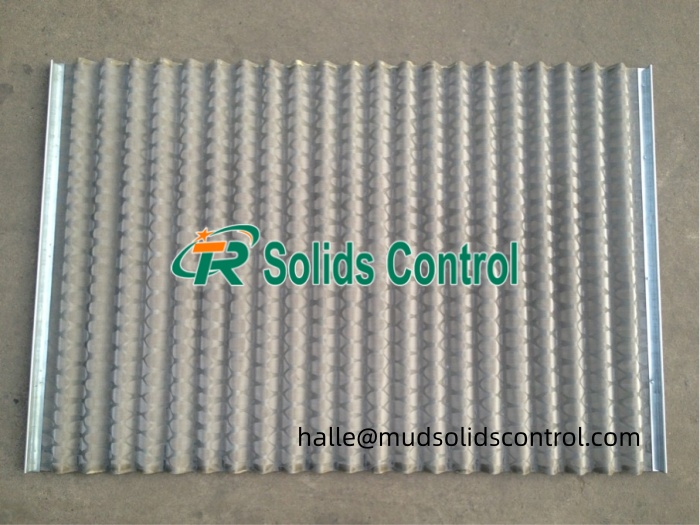
Although it is a consumable product, the quality of the shaker screen has a direct impact on drilling efficiency, mud recovery, and equipment protection.
A high-quality screen offers several advantages:
- Efficient solids separation
- Longer service life
- Better drilling fluid recovery
- Reduced screen replacement costs
- Stable performance in harsh drilling conditions
When selecting a shaker screen, consider API mesh size, screen conductance, durability, and compatibility with your shale shaker model.
TR Solids Control manufactures high-quality replacement shaker screens for many leading shale shaker brands. Our screens are made from premium stainless steel wire mesh and undergo strict quality inspection to ensure reliable performance and long service life.
Choosing the right shaker screen helps improve drilling efficiency while reducing operating costs.
What Are the Advantages of Derriok Hyperpool Screen
Derriok Hyperpool screen is a key consumable for shale shakers in oil & gas drilling solid control systems. It stands out for reliable performance and practical design. Below we introduce its main strengths and our product highlights.
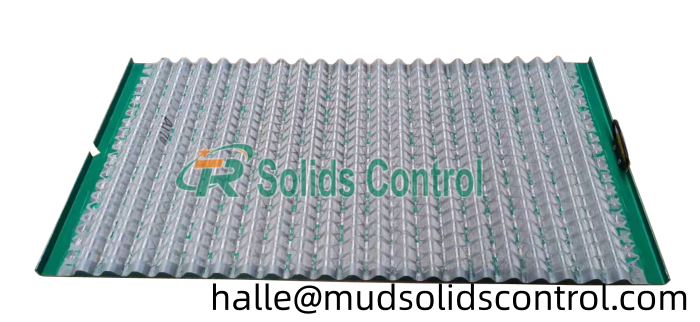
Core Advantages of Derriok Hyperpool Screen
1.Larger effective screening area
Adopting 3D wave structure, it greatly expands the actual working area. It delivers higher processing capacity and handles high-flow and high-viscosity drilling mud efficiently, improving overall working efficiency.
2.Excellent separation effect
Made with multi-layer weaving technology, it achieves precise solid-liquid separation. It effectively intercepts fine cuttings, keeps drilling fluid clean and reduces the workload of follow-up solid control equipment.
3.Strong durability
We use high-quality stainless steel and wear-resistant materials. The screen features great anti-corrosion, anti-impact and anti-clog performance. Its service life is much longer than ordinary screens, cutting frequent replacement cost
4.Easy installation & maintenance
It is designed for quick mounting and dismounting. Workers can finish replacement in a short time without complicated tools, minimizing equipment downtime on site.
Why Choose Us
We are an integrated manufacturer and trader specializing in oilfield screens. All our Derriok Hyperpool replacement screens have obtained API certification, fully complying with international industry standards.
Our products are manufactured strictly according to original dimensions and specifications, which means they can directly replace original Derriok screens without any modification to your existing equipment.
With independent production workshops and strict quality control, we offer cost-effective products and considerate after-sales service. Welcome your inquiries and cooperation.
API Certified Hyperpool Screen Manufacturer: Shale Shaker Performance QandA
Why does API certification matter when choosing a Hyperpool screen, and what does it actually guarantee for my drilling operations?
API certification isn’t just a badge—it’s your assurance of consistent cut point, conductance, and dimensional accuracy under real-world conditions. For Hyperpool screens (often used as a high-performance alternative to standard flat or pyramid screens), the API RP 13C (ISO 13501) standard validates that every screen panel delivers the claimed separation performance. As an API-certified manufacturer, Xi’an Tianrui subjects each production batch to strict conformity tests, covering mesh count, open area, and flow capacity. This means you get predictable solids control, fewer screen changes, and lower risk of formation damage—especially critical in high-angle or horizontal drilling where Hyperpool screens excel due to their efficient fluid distribution and anti-blinding design.
What technical features set a premium Hyperpool screen apart, and how do they affect my daily rig operations?
Unlike traditional flat screens, Hyperpool screens incorporate a unique multi-layer, stepped-pool configuration that accelerates fluid transport while retaining finer solids. The top coarse mesh acts as a pre-filter, while the lower fine mesh does the actual separation—this gradient design minimizes blinding and maximizes usable screen life. From an operational standpoint, you’ll notice sustained flow rates even when processing heavy LCM (lost circulation material) or high-viscosity fluids. Our API-certified Hyperpool screens also offer precisely calibrated conductance values (measured in kD·mm), helping you fine-tune your shaker’s G-force and bed depth settings. For rig crews, this translates to fewer downtime hours for screen swaps and safer, more predictable mud management.
How do I verify that a Hyperpool screen manufacturer truly meets API standards, and what should I look for in their quality system?
First, demand a valid API Spec Q1 or ISO 9001 certificate, and cross-check the manufacturer’s license number on the API Composite List. Second, ask for independent test reports—API RP 13C requires statistical process control (SPC) data on mesh alignment, bonding strength, and effective separation area. At Xi’an Tianrui, we go a step further by integrating digital tracking for each batch of Hyperpool screens, so you can trace raw material certificates (e.g., 304/316 stainless steel wirecloth from mills) and in-process QA records. Third, inspect the screen’s edge sealing and pretensioning uniformity; poor tension causes premature failure. Our production line uses automated tensioning rigs and thermal-bonded sealing, eliminating common failure points like delamination or glue weeping. By partnering with an API-certified specialist like us, you reduce the risk of non-conforming screens that could bypass solids and escalate mud costs.
Beyond certification, what real-world value can an API-certified Hyperpool screen manufacturer deliver for my specific well conditions?
A qualified manufacturer doesn’t just stamp products—they help you solve formation-specific challenges. For example, in high-RPM shale shakers (1,800+ RPM), a poorly constructed Hyperpool screen will fatigue rapidly at the crown bar contact areas. Our API-compliant design incorporates reinforced backing plates and anti-friction pads to extend service life. For heavy oil or sticky clays, we adjust the mesh crimp pattern and pool angle to shed solids faster. And because we control the entire production chain—from wirecloth weaving to final inspection—we offer fast-turnaround custom dimensions (e.g., for Brandt, Derrick, or SWACO shakers). Ultimately, choosing Xi’an Tianrui means getting a partner who provides not only API-certified Hyperpool screens but also application engineering support, helping you lower your cost-per-ton of solids removed. That’s how a component purchase becomes a strategic efficiency gain.
How to Choose a Hyperpool Screen Supplier?
Choosing the right Hyperpool screen supplier is about more than just finding a low price. The screens you use directly affect solids control efficiency, drilling fluid recovery, and overall operating costs. So how do you select a supplier you can trust?
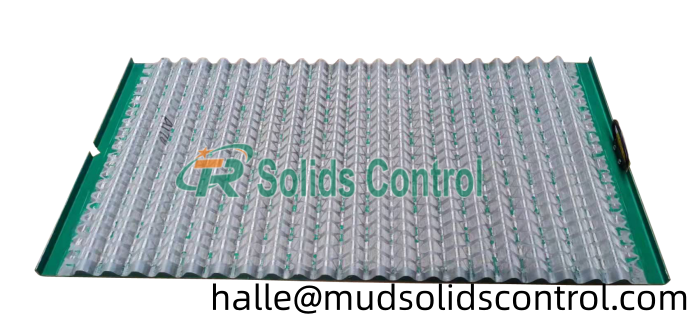
Choosing the right Hyperpool screen supplier is about more than just finding a low price. The screens you use directly affect solids control efficiency, drilling fluid recovery, and overall operating costs. So how do you select a supplier you can trust?
Start by looking at screening accuracy and open area. A quality Hyperpool screen maintains consistent mesh ratings while allowing sufficient fluid flow. Inconsistent mesh leads to rapid blinding or excessive solids passing through, both of which hurt performance. Next, examine the bonding quality and materials. Hyperpool screens are typically made of multiple layers of stainless steel wire cloth bonded to a perforated metal backing plate. The bonding must withstand continuous high vibration and abrasive wear. Poor adhesion causes delamination and dramatically shortens screen life.
Compatibility is another key factor. Different shaker models use different screen dimensions. A reliable supplier should offer screens that match your Hyperpool shaker exactly, or provide custom sizes in line with API standards. Supply stability also matters. Drilling operations cannot afford long downtime, so choose a supplier with adequate inventory and a responsive logistics network.
Beyond product quality, technical support is crucial. The best suppliers help you select the right mesh series for your formation, solve blinding problems, or address premature wear. That requires real oilfield experience, not just a sales pitch.
At Xi’an Tianrui Petroleum Equipment Co., Ltd., our production base is located in Yangling, Shaanxi. We have specialized in Hyperpool screens for over a decade. Our screens feature high-strength stainless steel mesh, heavy-duty resin bonding, and full compatibility with major shaker models. We don’t believe in one-size-fits-all solutions. Every drilling operation has unique conditions—formation type, flow rate, shaker model. That’s why we take time to understand your specific requirements and provide tailored recommendations and clear pricing based on real needs. Contact us to discuss your application. You’ll get solid advice, not generic answers.
Features of API 13C Shaker Screen
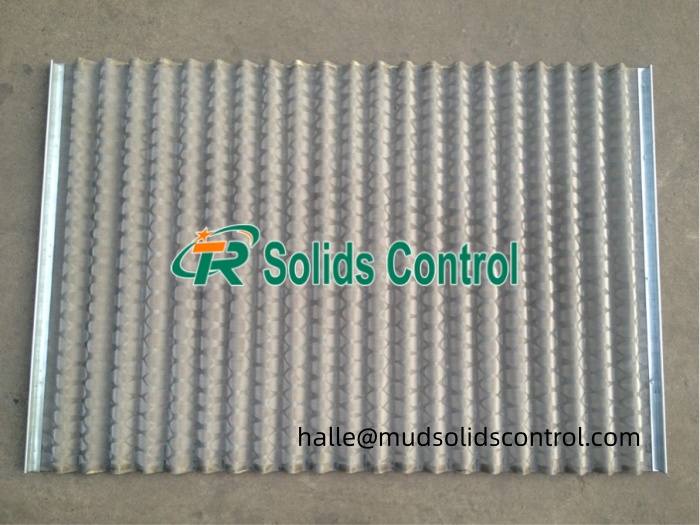
Complying with unified industrial inspection standards, API 13C shaker screens are defined by three core indicators: D50 cut point, D100 separation point and conductance. Products with identical API grades feature consistent technical data for cross-brand comparison, effectively preventing fake parameters common on non-standard screens. Constructed with multi-layer woven 304/316L stainless steel, these screens resist mud corrosion and high working temperature. Corrugated screen surfaces expand liquid throughput and reduce blinding while reinforced bonded frames stay intact under continuous vibration. With complete grade coverage from API20 to API400, varied mesh sizes support staged solid control for different drilling conditions.
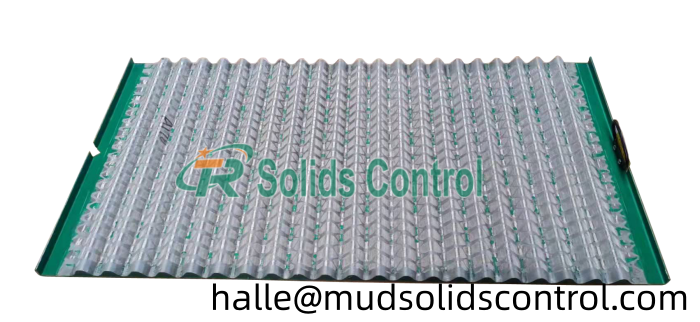
Thanks to standardized installation dimensions, API 13C screens serve as direct replacements for original screens of mainstream shaker brands including Derrick, Brandt and Swaco, cutting spare part inventory and procurement costs for mixed-equipment job sites. Regulated raw materials and manufacturing processes deliver superior wear resistance and longer service life versus generic alternatives, minimizing downtime from frequent screen replacement. Accurate separation lowers liquid retention on cuttings to save drilling fluid expenses, and minor local damage can be repaired instead of full screen replacement to further reduce operational costs.
Multiple styles are available to suit diverse working scenarios: economical flat screens for onshore shallow conventional wells, high-flow corrugated screens for high-solid-content shale and deep wells, and anti-corrosion 316L screens for corrosive offshore platforms, covering nearly all onshore and offshore drilling environments.
How to Replace Hyperpool Screen?
What is the standard replacement process for a Hyperpool screen?
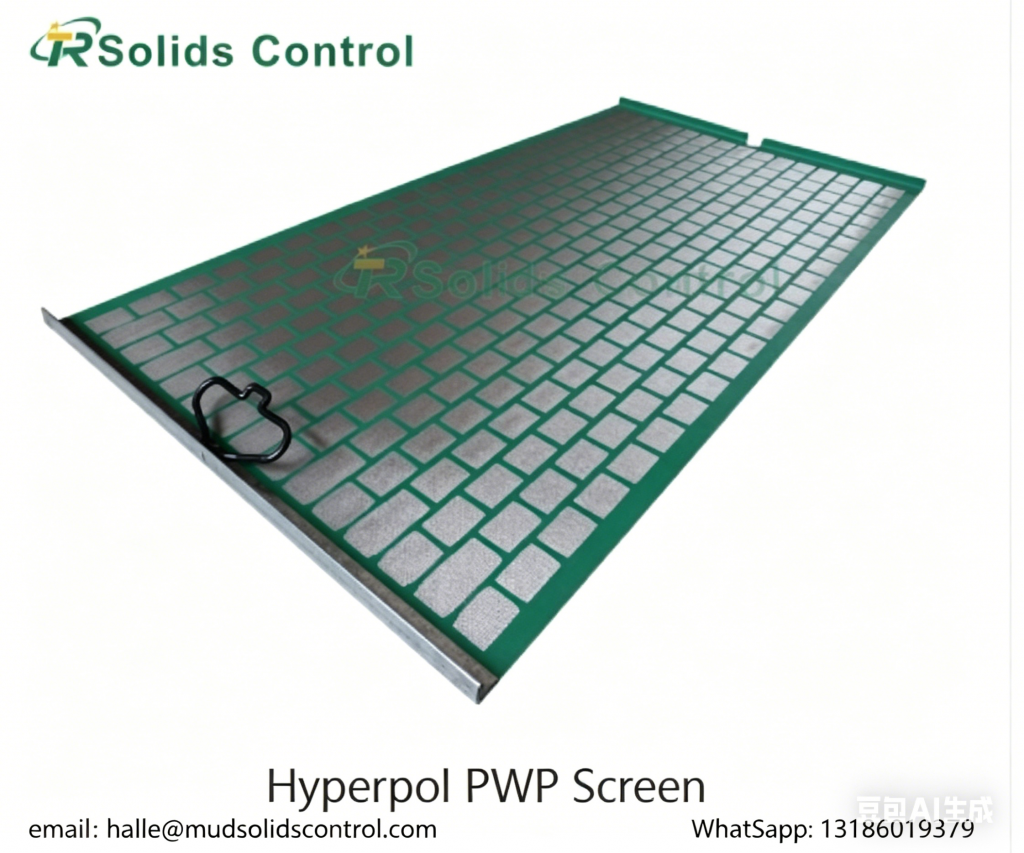
Replacing a Hyperpool shaker screen is a simple, efficient operation that requires no professional modification, and it can be completed on-site following standard safety and operating procedures. First, cut off the equipment power, shut down the vibration motor, and lock and tag the power supply to ensure construction safety, while stopping the slurry feed to avoid on-site pollution and safety hazards. Next, release the compression handle of the screen frame, disassemble the fixing pins and positioning components, and gently remove the worn, blocked or damaged old screen. Finally, align the new Hyperpool replacement screen with the screen bed positioning holes, fix the compression components firmly, adjust the tightness to ensure a flat and stable installation without deviation, and test run the vibrating screen to confirm normal operation. The whole process is time-saving and labor-saving, effectively reducing equipment downtime.
What troubles do users often encounter when replacing Hyperpool screens?
Many drilling and solid control operation teams often face two major problems when replacing Hyperpool screens: poor compatibility of alternative screens and short service life of low-quality screens. Some non-matching screens are prone to loose installation, edge warping and material leakage after replacement, which affects the separation efficiency of the vibrating screen. In addition, inferior screens are easy to wear and block, requiring frequent replacement and increasing operating costs and labor costs. Many users also report that some replacement screens cannot adapt to the original Hyperpool shaker equipment, resulting in complex installation and even equipment failure.
Why choose Xi’an Tianrui Petroleum’s Hyperpool replacement screens?
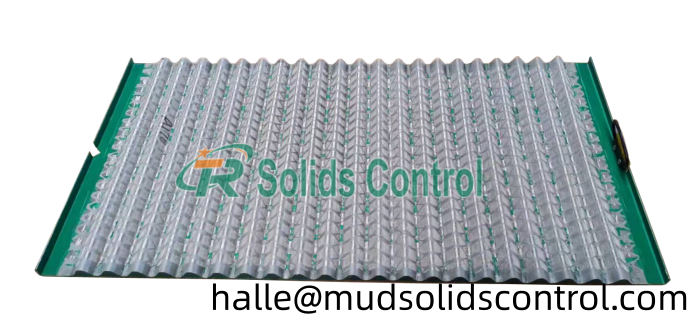
As a professional manufacturer of petroleum solid control equipment accessories, Xi’an Tianrui Petroleum Machinery provides high-precision, fully compatible Hyperpool replacement screens, perfectly solving the pain points of screen replacement for global customers. Our screens are strictly produced according to the original equipment size standards, featuring 100% plug-and-play compatibility, no need for secondary processing during installation, which greatly simplifies the replacement process and improves on-site work efficiency. Adopting high-strength wear-resistant composite materials, our products have excellent anti-blocking, corrosion-resistant and high-temperature resistant performance, with a service life 30% longer than ordinary alternative screens. While ensuring stable drilling fluid separation effect and high screening efficiency, our Hyperpool replacement screens effectively reduce frequent replacement frequency, cut down the overall operation and maintenance costs for customers, and are a cost-effective and reliable choice for global petroleum solid control operations.
Full Range of API RP 13C Standard Replacement Screens for Derriok Equipment
Derriok shaker screens are widely used in overseas oilfield solid control systems, and high-quality replacement screens are key to stable drilling operations. Xi’an Tianrui Petroleum Machinery Co., Ltd. provides a complete line of Derriok-compatible replacement screens fully compliant with API RP 13C international standards. All products match original factory dimensions, tensioning structures and screening precision, perfectly fitting Derriok FLC500, FLC2000 and Hyperpooil models. With verified and reliable performance for real oilfield working conditions, we deliver cost-effective and stable screen replacement solutions for global Derriok equipment users.
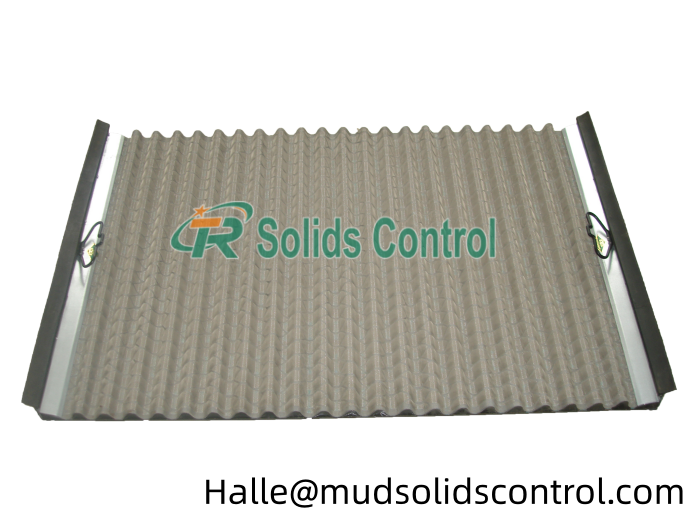
PMD Pyramid Wave Screen (Derriok FLC500 Exclusive)
Our PMD 3D pyramid wave screen is an upgraded replacement solution tailored for Derriok FLC500 and FLC503 shaker screens. Compared with ordinary flat screens, its three-dimensional wave structure provides larger effective screening area and higher mud permeability, effectively reducing clogging and rapid wear under high-sand and high-viscosity mud conditions. Made of 304/316L multi-layer stainless steel mesh and integrated polyurethane soft edge, it fits the original equipment tensioning and sealing structure perfectly, preventing slurry leakage and peeling, and supporting long-term continuous operation. ation.
Standard Hooked Flat Screen (Universal for All Derrick Models) We supply universal hooked flat screens in 20–325 mesh, compatible with all Derriok models and suitable for both water-based and oil-based mud. With standard hook edge design, they install quickly, tension evenly and maintain stable screening accuracy for daily operation. For heavy-duty scenarios such as offshore platforms and deep well drilling, our reinforced framed screens are customized for Derriok FLC2000 and Hyperpooil large shaker screens. The thickened composite mesh and integral frame improve tensile and deformation resistance, effectively avoiding screen failure caused by 24-hour continuous high-load operation and reducing overall maintenance costs.
Anti-Clogging Screen and Custom Edge Solution for All Derriok Models Our polyurethane composite anti-clogging screens solve the common blinding and blockage problems in fine sand and high-viscosity mud conditions. The optimized composite structure reduces mud adhesion and particle accumulation, lowering frequent cleaning losses and improving continuous operation stability. To adapt to diverse overseas equipment conditions, we provide both soft-edge and hard-edge customized screens. Polyurethane soft-edge screens match new standard Derriok equipment for tight sealing, while metal-reinforced hard-edge versions suit old or modified equipment to solve loose installation and poor fitting issues.
Tianrui Core Cooperation Advantages All Tianrui Derriok replacement screens comply with API RP 13C standards and can fully replace original accessories. We adopt practical and verifiable product performance without false data or exaggerated effects, effectively solving the pain points of fast screen wear and high replacement costs in complex overseas oilfield working conditions. Supported by stable quality, flexible customization and reliable batch delivery capability, we are a trustworthy long-term supplier for global oilfield solid control consumable procurement.
How to Choose High-Quality FLC2000 Hook Screens
The FLC2000 hook screen is a core consumable for Derriok FLC2000 shaker machines. It directly affects mud screening performance, equipment downtime frequency, and overall construction costs.Most buyers encounter the same problem: prioritizing low prices above all. Although cheap screens seem cost-effective at first, they frequently cause sand leakage, screen clogging, glue peeling, and wire breakage. Frequent screen replacement and on-site debugging lead to repeated downtime, raising labor and operation costs far in the long run.In fact, you do not need to struggle with complicated parameters when purchasing FLC2000 hook screens. The selection only focuses on three core dimensions: perfect compatibility, stable durability, and cost-effective operation.
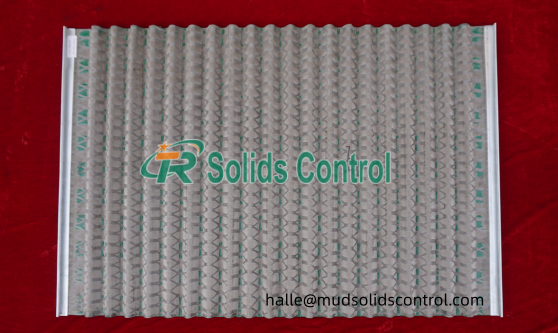
Compatibility: Precise Size, Type and Mesh to Avoid Rework and Leakage
Compatibility is the top priority for FLC2000 hook screen selection. High-quality screens adopt the standard 697×1053mm size and original quick-install hook structure to ensure a perfect fit, effectively avoiding installation errors, sand leakage and screening failure caused by inferior products with inaccurate sizes and non-standard hooks. Various screen types including wave, flat and PWP styles and precise mesh sizes ranging from 40–80 mesh for desanding, 120–170 mesh for desilting to over 200 mesh for fine purification can fully meet different on-site solid control demands.
Quality: Material and Craftsmanship Determine Durability and Working Efficiency
Material and craftsmanship are decisive to screen durability and working efficiency. We adopt 304 stainless steel for conventional working conditions and corrosion-resistant 316L stainless steel for high-salinity and harsh environments, with premium 2-3 layer composite mesh and precise bonding technology to prevent delamination and wire breakage. Well-crafted hook strips maintain stable tension under long-term vibration, and the optimized wave structure provides larger screening area, fast mud penetration and excellent anti-clogging performance. All products comply with API RP 13C standards for reliable and continuous high-intensity operation.
Practicality: Easy Installation and Reliable After-sales to Reduce Overall Costs
To avoid economic losses caused by equipment downtime, our FLC2000 hook screens feature a standard quick-install structure that allows one-person 3-minute replacement without secondary adjustment, greatly cutting downtime and labor costs. We maintain stable batch consistency in size, mesh accuracy and workmanship, adopt professional packaging to prevent transportation deformation, and provide reliable after-sales services for quality-related returns and replacements to eliminate purchasing risks
Final Selection: Focus on Long-term Cost Performance
When selecting shaker screens, the core goal is to control long-term operating costs and improve overall construction efficiency.Purchasing FLC2000 hook screens is never about choosing the lowest price, but choosing products with accurate compatibility, stable quality and hassle-free use. Stable screening performance eliminates frequent screen replacement and construction rework, effectively reducing comprehensive engineering costs and ensuring project progress.Looking for highly compatible, wear-resistant and anti-clogging FLC2000 hook screens with sufficient stock? We support customized mesh size, material and structure for different working conditions with stable quality and reliable after-sales service!
Hyperpooil Screen: Core of Efficient Oilfield Solids Control
In oil and gas drilling operations, the shaker screen acts as the first critical barrier of the solid control system, directly determining the purification effect of drilling fluid and the overall drilling cost. As a special matching screen for Derriok Hyperpooil series shaker screens, the Hyperpooil Screen has become a mainstream choice for high-end oilfield solid control screening due to its excellent screening performance, durability and low operation and maintenance costs, suitable for various onshore drilling conditions.
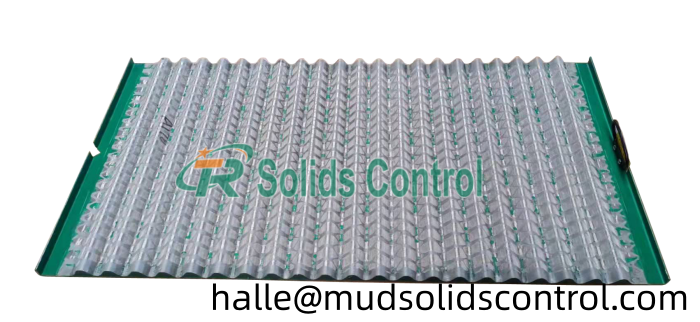
What is Hyperpool Screen?
Hyperpooil Screen is a professional wear-resistant screen specially designed for the full range of Derriok Hyperpooil shaker screens, compatible with various integrated machines and gas-phase screening equipment. Adopting exclusive pyramid three-dimensional screening technology, it increases the effective screening area by about 45% compared with traditional flat screens. It can efficiently separate drilling fluid and cuttings, solve common problems of traditional screens such as easy blockage, poor screening accuracy and large mud loss, and stably maintain drilling fluid performance.
Core Advantages Hyperpooil Screen features excellent wear resistance and structural rigidity, resisting deformation under long-term high-frequency vibration. It works steadily in harsh drilling environments with acid and alkaline fluids. The reinforced mesh structure effectively cuts material adhesion, further lowering screen failure rates and maintenance frequency. With a long service life and reliable performance, it helps reduce overall operational expenses.
Product Application and Usage Notes Widely applied in conventional, deep, extended-reach and high-solid-content oil/gas drilling wells, this screen purifies drilling fluid, stabilizes mud properties, cuts additives, dehydrates cuttings and facilitates waste treatment. Select screens per API standards and perform regular cleaning and proper handling to extend service life.
With rich experience in oilfield solid control screening, Xi’an Tianrui’s Hyperpooil Screen complies with industry and OEM standards. Adopting advanced 3D screening technology, it is efficient, durable and easy to install, solving clogging, damage and high maintenance issues of traditional screens. Ideal for various drilling operations, it optimizes solid control, stabilizes drilling fluid and reduces costs for efficient, eco-friendly work.
Introduction to 48-30 PWP High-performance Fine Screening Shaker Screen
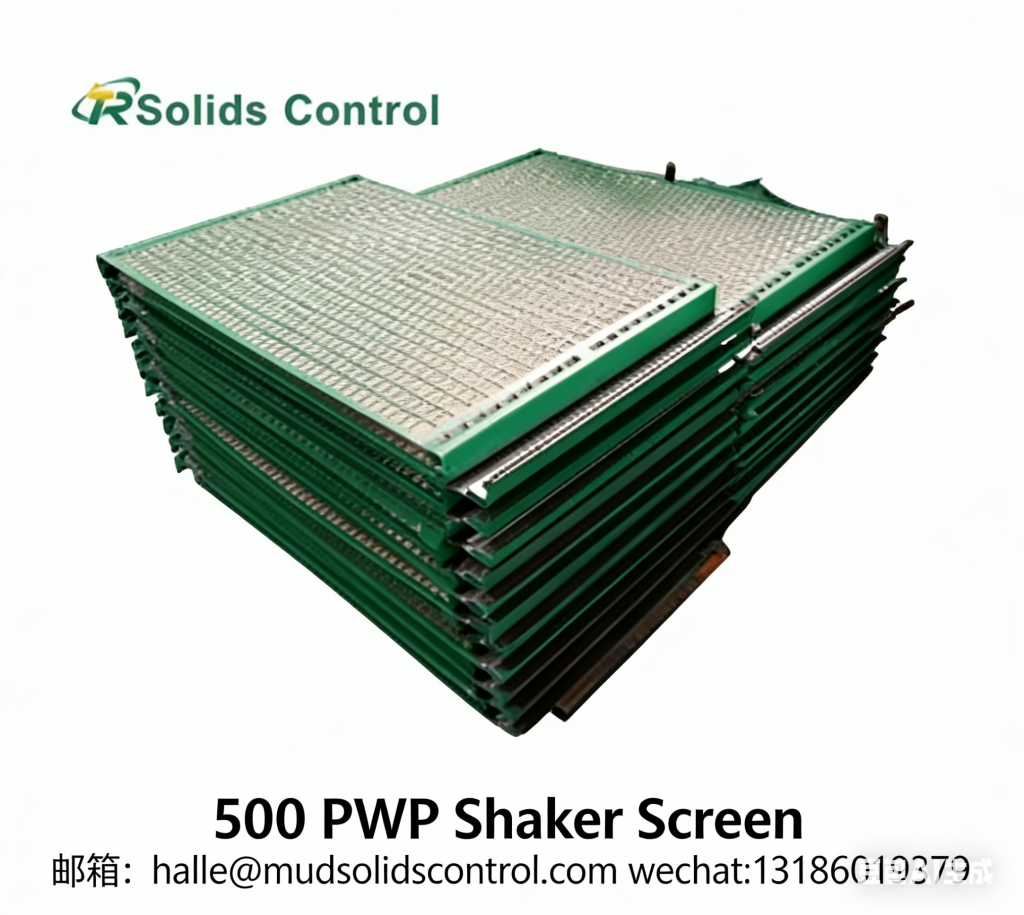
Screen performance directly affects the production efficiency and finished product quality of industrial screening lines. Widely used in oil drilling, mineral processing, aggregate classification, and coal chemical industries, the 48-30 PWP screen is a industry-standard flat hook strip shaker screen. Featuring a stable structure, precise screening accuracy, and excellent equipment compatibility, it serves as an ideal replacement for Derriok FLC2000 and other mainstream shale shakers. This article elaborates on the core features, standard configurations, and practical advantages of our mass-produced 48-30 PWP screens.
1. What is a 48-30 PWP Screen?
The specifications “48-30” and “PWP” are universal industry codes that define the exact size and structural type of the screen panel.48-30 refers to the standard dimension of 48×30 inches (approximately 1050mm×700mm), specifically engineered for Derrick FLC2000 shale shakers and mud shaker screens. With high versatility, it can directly replace original equipment screens without any mechanical modification.PWP stands for Flat Type Hook Strip Screen, a flat hook-edge screening solution. Unlike PMD pyramid raised screens, it adopts a flat mesh surface and integrated hook structure to ensure tighter installation fit and uniform vibration distribution. It is optimized for precise fine screening with superior anti-clogging and wear-resistant properties, suitable for both dry and wet screening applications.Conventional single-layer screens are prone to structural deformation and uneven screening results. In contrast, standard 48-30 PWP screens adopt a professional multi-layer composite structure, which underpins its outstanding overall performance.
2. Core Product Configuration
Our 48-30 PWP screens adopt high-quality 304/316 stainless steel high-carbon alloy wire, featuring great corrosion, oxidation and abrasion resistance to adapt to harsh working conditions of mud, sewage and chemical materials. The 2–3 layer composite structure with thickened galvanized backboard effectively avoids delamination and mesh collapse, greatly improving impact and tensile resistance. We support full API20 to API400 mesh customization with precise aperture control, ensuring uniform screening and no material leakage. The integrally formed flat hook enables fast, tool-free single-person installation, effectively reducing equipment downtime and ensuring stable shaker operation.
3. Product Advantages & Quality Assurance
Optimized for traditional screen defects, our 48-30 PWP screens deliver higher efficiency and lower operating costs. The smooth burr-free mesh prevents material adhesion and clogging, boosting screening throughput by over 20% and reducing frequent shutdown cleaning. The upgraded wear-resistant and anti-fatigue structure extends service life to 1.5–2 times that of ordinary screens, lowering replacement and maintenance costs. Standard size design ensures 1:1 replacement of imported Derriok screens with higher cost performance. All products undergo strict factory testing to guarantee stable performance for long-term high-intensity production.
4. Main Application Scenarios
With outstanding fine screening capability and strong condition adaptability, our 48-30 PWP screens serve a wide range of industrial scenarios, including petroleum drilling mud purification, mining and aggregate desliming/dewatering, chemical powder impurity removal, coal washing classification, and various industrial solid-liquid separation projects.
- Petroleum Drilling: Drilling mud purification and solid-liquid separation to ensure stable drilling equipment operation;
- Mining & Aggregate Processing: Desliming, dewatering, and grading of quartz sand and manufactured sand to improve finished aggregate purity;
- Chemical & Coal Chemical Industry: Fine screening and impurity removal of powdered and granular chemical materials;
- Coal Washing & Environmental Protection: Coal slurry dewatering, medium removal, and fine material classification for humid, impurity-rich working environments;
- Industrial Solid-Liquid Separation: Sewage sludge filtration and material dewatering and classification.
5. Why Choose Our 48-30 PWP Screen
The 48-30 PWP screen is a cost-effective and high-performance fine screening accessory, solving common problems of traditional screens such as clogging, deformation and short service life. With standard sizing, stable structure and high precision, it is an ideal substitute for imported screen parts.We strictly control product quality to support long-term high-load operation, helping enterprises reduce procurement costs and improve production efficiency. We provide customized mesh and material solutions, welcome to contact us for professional technical support and selection guidance.